 SIGN UP NOW FOR YOUR FREE TRADING CARD

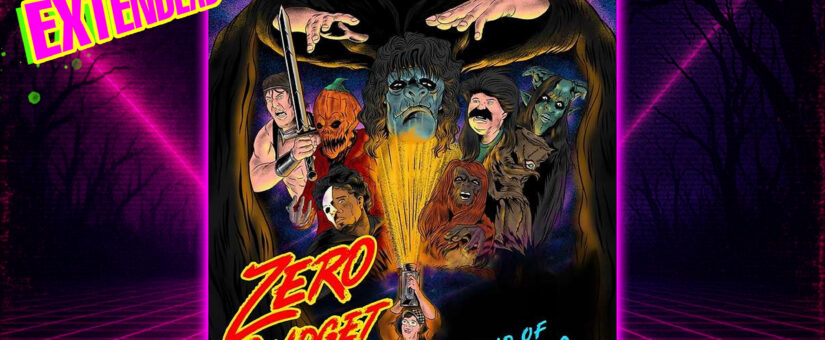
Zero Budget Heroes: The Legend of Chris Seaver & Low Budget Pictures – The 31 Days of Dead
- Posted by PETER A DELUCA AKAPD
- On October 24, 2026
- 2026, 31 days of dread, 31 days of dread 2026, chris seaver, documentary, documentary podcast, film buff, film buff podcast, horror, horror documentary, horror movie, horror movie podcast, horror podcast, podcast, talk, troma, warlock home video
Exploring the Microbudget Horror Scene Through “Zero Budget Heroes”
In Zero Budget Heroes: The Legend of Chris Seaver & Low Budget Pictures, director Zach Olivares delivers a warm, unvarnished portrait of one of the most prolific figures in the shot-on-video (SOV) and microbudget horror-comedy scene. Rochester-based filmmaker Chris Seaver founded Low Budget Pictures in the early 1990s and has spent decades churning out intentionally crude, friendship-driven “crapsterpieces” such as Mulva: Zombie Ass Kicker, Filthy McNasty, and Teen Ape—films made for almost no money with a tight-knit repertory of friends rather than professional actors. This 2022 documentary, now available to watch free on Tubi, captures the chaotic energy of their shoots, the deep loyalty of the Low Budget Pictures crew, and Seaver’s connections to the broader underground ecosystem that includes Troma Entertainment and Lloyd Kaufman. For fans of DIY horror, SOV history, and the kind of backyard genre filmmaking that never chased Hollywood validation, Zero Budget Heroes functions as both a celebration and a time capsule. As part of the 31 Days of Dread series, it fits perfectly into the weekend documentary slot—offering a deeper look at the passion, improvisation, and community that keep microbudget cinema alive long after the cameras stop rolling.
In this detailed reflection, film enthusiast Peter A. Duca presents an insightful review of the documentary Zero Budget Heroes: The Legend of Chris Siver, featured as part of his annual “31 Days of Dread” horror movie series on Tubi. Duca highlights the unique niche of microbudget and low-budget filmmaking embodied by Chris Siver and his circle, linking it to a broader underground ecosystem that includes legendary figures like Lloyd Kaufman of Troma Entertainment. This documentary offers a rare glimpse into the grassroots, community-driven passion behind horror microcinema—movies made with minimal funds but immense creativity and camaraderie.
Duca emphasizes the authenticity and familial atmosphere captured in the documentary, where the filmmaking process blurs lines between friendship, performance, and shared artistic obsession. He contrasts the trajectory of filmmakers like James Gunn, who quickly transitioned to mainstream success, with Siver’s persistent but less glamorous path grounded in DIY ethos. The documentary reveals the struggles, missteps, and sometimes chaotic shooting conditions these indie creators face, all while showcasing their tenacity and devotion to their craft.
Moreover, Duca positions this type of documentary as a vital cultural time capsule, preserving the legacy of an often overlooked segment of cinema history. It appeals primarily to viewers who appreciate horror and underground film culture, offering both a celebration and a critical look at the youthful audacity and imperfections behind cult filmmaking.
Finally, Duca connects this viewing experience to his broader programming vision—weekends reserved for documentaries that educate and deepen film appreciation—and teases upcoming content for November and December with themes of gratitude and holiday movies.
Highlights
- 🎥 The documentary Zero Budget Heroes spotlights Chris Siver’s microbudget filmmaking journey.
- 👥 Showcases the close-knit, collaborative filmmaking community surrounding Siver.
- 🎬 Connects lowbudget horror legends like Lloyd Kaufman and Troma Entertainment to Siver’s story.
- ⏳ Captures the chaotic, improvisational reality of grassroots microbudget film production.
- 🤡 Explores themes of friendship, performance, and obsession within indie film culture.
- 🔄 Contrasts Siver’s path with mainstream success stories like James Gunn.
- 📅 Positions such microbudget documentaries as important time capsules of cult cinema history.
Key Insights
- 🎞️ Microbudget Filmmaking as a Cultural Phenomenon: Siver’s story exemplifies how horror microcinema survives on passion and community, not money. These films foster a unique artistic ecosystem that challenges Hollywood’s resource-heavy model. Despite limited budgets, creators like Siver maintain a vibrant output by leveraging local talent, friendships, and sheer grit. This reveals how cultural production can flourish outside mainstream channels.
- 👨👩👧👦 The Power of Collaborative Filmmaking Communities: The documentary underlines that filmmaking in this subculture is deeply social, almost familial. The blurred boundaries between friends, cast, and crew shape not only the films but the creative identities involved. The relational dynamics—ranging from encouragement to subtle performance pressure—highlight the emotional complexity embedded in microbudget productions, giving them a distinct authenticity.
- 🔗 Importance of Legacy and Documentation: Duca’s reflection stresses the need to preserve the histories of creators like Siver, whose work might otherwise be forgotten. Documentaries like this serve as cultural artifacts, tracing underground cinema’s evolution and giving voice to filmmakers operating at the margins. This aligns with his own archival efforts, emphasizing why documenting film and art history—especially outside mainstream spheres—is essential for future appreciation and study.
- ⚖️ The Tension Between Art and Immaturity: The documentary candidly admits moments of creative immaturity, missteps, and lack of foresight in early projects. Yet, it frames these flaws as integral components of Siver’s artistic journey. This honest representation provides a realistic, nuanced perspective on indie art creation, rejecting polished myths in favor of real conditions marked by experimentation, failure, and perseverance.
- 🚪 Divergent Career Trajectories in Independent Cinema: By contrasting Chris Siver’s slow, grassroots approach with James Gunn’s rapid rise to mainstream Hollywood, the narrative draws attention to the varied opportunities and outcomes available within independent film. It illustrates how some microbudget filmmakers transition to commercial success, while others remain in a niche, cultivating cult followings and sustaining their practice through passion alone.
- 🎭 Audience Specificity and Appeal: The film’s appeal centers on viewers who already appreciate or are curious about cult horror and microcinema aesthetics. Those unfamiliar with or uninterested in lowbudget horror may find it inaccessible or trivial. This insight highlights the importance of targeting niche audiences who seek out alternative filmic experiences beyond conventional cinema.
- 📺 Integrating Microbudget Content Within Broader Programming: Duca’s inclusion of this documentary in a weekend slot dedicated to education and documentaries underscores the curatorial potential of such content. By pairing hardcore horror features during the week with reflective, behind-the-scenes documentaries on weekends, he creates a balanced programming flow that deepens viewer engagement and contextual understanding.
Peter A. Duca’s commentary not only introduces Zero Budget Heroes as a must-watch for microbudget horror fans but also situates it within a broader cultural and cinematic discourse. This reflection invites viewers to appreciate the artistry and community behind often-overlooked independent productions and to recognize their significance as living histories of underground film culture.
00:00:03
Treat my fellow film buffers. It’s the 31 days of dread, the annual event where the film buff, that’s me, Peter A. Duca, coming to you from Philadelphia, PA, where I discuss and review and bring to your attention one horror movie a day for the entire month of October. This year’s theme is Tuby. We can watch all of these movies for free. You can watch them as a guest. You don’t even need an email login. We can share the experience together. So, get ready. Get some candy. Don’t get too scared. Let’s go.
00:00:38
[groaning] So, here we go. It’s the weekend. We do documentaries. See, the way I envision you and me, my fellow film buffers, the aka pad army out there, we’re nine years deep in this 31 days of dread journey. One hard movie a day for the entire month of October. I’m your host. I’m your boy Peter A. Duca. Obsessive Filmfree coming to you from Philadelphia, PA. Now, here’s the crazy thing. I’ve met a lot of people. As much as I’d like to brag about not going to a lot of conventions,
00:01:17
gatherings of these sorts, and almost like walking my own path, but and staying away from maybe like a little bit of a collected delusion of independent movies and comic books and animation. I do my own thing, right? But I meet a lot of people and I meet them in all kinds of different uh different ways. This documentary zero budget heroes the legend of Chris Siver and lowbudget pictures some people call this uh what micro film making microbudget film making there’s a adjacent series right now on Tuby and
00:02:02
you guys know our theme this year for 31 days of dread is TB everything I bring to you is available right now on Tuby. You can watch as a guest. You don’t even have to uh subscribe or give them an email. Just watch the ads. That’s all 2b1s. They’re building an empire just from ad watchers alone. This documentary artfully written by and directed. Now, we talked about this before. A lot of documentary writing is in the editing room. That’s kind of how you get the credit. Zack. and take a shot because
00:02:39
I’m gonna butcher this last name. Ovaries Oliver are livers. Zack Oliveries. This dude put together a story that makes you love this guy. You leave this documentary rooting for Chris Siver. I watch it. We’re connected to Croh Tro. We’re connected to Lloyd Kaufman. I Google this guy. I Google him. I find him on all of the socials I subscribe, I follow. He’s heavy on Facebook. But the point I was getting at earlier is in all of my travels at EK Patter, there were some familiar faces in this
00:03:26
documentary that I felt like I may have met. So my apologies. We live a life. So, what what is this documentary? Why is it special? Why are we adding it to the 31 days of dread extended? Why are we using it for our documentary time slot for weekend drops? You guys know I envision our weekends collectively as watching cartoons in the day and educating ourselves at night with documentaries. [snorts] It’s it’s very simple. We don’t envision this path often. This path is not easily laid out for us
00:04:12
as an audience. Other people have tried similar documentaries. They’re not engaging. They don’t make you want to do this. The family atmosphere of this documentary, you just wrap your arms around. You get a little jealous. You’re like, “Man, I wish I had friends like this that I could I could just make movies.” And then therein lies not only the charm, but the the magic of Chris Siver. Isn’t it amazing? This dude makes movies. No one’s ever heard of him. Let’s just be honest. He
00:04:45
he makes some money, makes no money. Let’s just be honest. But he has this core. He has this collective around him. And it’s fascinating. He’s connected to Lorie Kaufman. What? Where uh some of my friends are still. Lorie Kaufman is the guy behind Tromo War. No, Troio and Juliet. No. Uh [laughter] he’s behind Toxic Avenger, the Toxic Crusader. See, you guys know how much I love the Toxic Avenger. Sergeant Kabuki man. I I can go on about with all the trauma stuff. Lori Kaufman is the
00:05:24
lowbudget microbudget uh promotion like super genius but at but at the same time uh you you can tell just from his character because he does play a character he’s got a few documentaries some of them are available on on Tuby. This guy is uh in his own right a genius. The he visualizes the movie and knows what to do with it. Uh he has connections that he can get movies out and it seems like any available network period or platform has trauma movies. Uh I I kind of want to say early Netflix had trauma movies.
00:06:07
So Chris Siver comes up through this co coincidentally. So did James Gunn. James Gun was a little bit a part of of this group, but James Gunn uh went on like a completely different path where he got legitimate very quickly, even, you know, with some of his early video game work. But where Chris Siver is is a lot of what I ran away from. And we have this documentary that we talked about earlier this year called Clapboard War Jungle. You have to watch that and watch this movie kind back to back. Watch them in
00:06:43
sequence because at one time I was a part of a group like this in in South Jersey where our customers in a comic shop, our employees, myself, we had a lot of talent. And even on my website, I I’ve spent a lot of time documenting uh all all of this talent. Some of them are still out there. They’re still making movies. Uh some of them rain in the internet controversy. Some of them I think one of them just uh dropped the movie too, by the way. But I ran away from it because I in my view there was a level of seriousness
00:07:28
and legacy and longevity that had to be uh taken like now like you got to be serious and you got to document your work uh like like in a way to validate all of your efforts and everything you’re pouring into it. uh for myself that became akapad.com which is roughly uh like a 10-year effort where I digitized my entire art portfolio, all my writing and I’m slowly like you know releasing it on onto the website and it’s all available via timeline blog but I ran away from it. I I didn’t see a
00:08:09
lot of the potential even though uh I never stopped creating. But Chris Siver and they go through some of his troubles with trauma. They get into some of his techniques. They get into uh some of the budgets. Uh it’s awesome when when they try and shoot inside of a house and like the brother-in-law shows up and he kicks everyone out of a house and they have to pivot. It’s awesome when they have 72 hours sushi movie. I think Skiwolf, he he he comes up with the Skiwolf idea movie which is like Teen Wolf
00:08:44
and it’s it’s somewhat of these uh like Porky inspired 80s uh beach uh ski camp or or like somewhat vacationdriven movies where uh you have a couple yuppies and then there there’s a couple punk people. uh these types of comedies were insanely prevalent throughout the 80s. So, he kind of match uh mashes these two genres. Ski Wolf is available on Tuby right now. And I believe they shot that movie in 72 hours. And [snorts] we get into some of the characters and and how his entire inner circle was created and what they
00:09:24
like to do on film. And uh like we get we get into almost like the psychology of are we performing for him? Are we performing with him? Are we performing because we we want to please like there’s all of this stuff. But I feel like every every person that gives some of the uh confessionals or or interviews in this documentary leans towards one of those scenarios to where uh we find out that people just got like roped into it and he would meet people off the the you know aol like chat rooms and things like that and be like hey you
00:10:06
like didn’t you move near me if you want to make movies and then he would like almost like keep harassing people and roping people in, which is a lot of what you hear about Lori Kaufman, by the way. Some of the characters are I think some of the characters that they showcase here, and I haven’t seen any any of his uh movies yet. I will, by the way. Some of the characters that they showcase and the performances I just I I think are hilarious. So there’s a certain type of fil like film fan. There’s a certain
00:10:40
type of sketch of the audience that even this documentary pushes itself towards and appeals to a lot of Chris Siver is is edge lord. It’s gore. It’s violence. It’s pushing limits. seeing what you can get away with, which he walks through that door. Also in this documentary where he owns up to maybe being a little immature, misguided, having no foresight in some of his earlier work. very significant I think of this style documentary which is again a microbudget documentary but Zach what Zach does here
00:11:23
he lays out the timeline the career what the next steps are we root for the guy we want him to again a lot of what we got out of the clapboard jungle I’m always disappointed when I when I realize I’m like wow this is from 2022 wow it’s been four years let’s look them up I’m Sure, there’s something. And sometimes there is and sometimes there’s not. But Chris seems like he’s still doing the same exact thing, which is where we like leave them on the documentary. Really good, powerful stuff. This style
00:11:56
of documentary will appeal to the people who appreciate the style of film that he creates. I don’t think this documentary crosses over to people that don’t understand what types of movies these are. If if it’s someone that only understands Martins Corsesi and Paul Thomas Anderson and who’s up for the Oscar and you watch this documentary, you’re you’re going to think it’s all high school, which also makes it a little bit more special. This is a time capsule and works like this
00:12:32
that Zach created are highly important which is why we talk about them and I I’m even putting my my time and everything on the line to bring it to you and if it reaches one or two maybe even you know because we get we get good numbers on this podcast my my film buffers if it reaches a few of you I’ll say at least three I’ve done the work for the whole year. All right, AK Packers, I love you guys. Wrapping up this episode, let me remind you what we have coming. As you guys know, 31 days of dread, one horror movie
00:13:07
a day for the entire month of October. But going into November, it’s Thanks Flicking where I document the films I’m thankful for. And it gets very personal sometimes. And then we get cinemas, December, Christmas. We love Christmas movies. We do horror Christmas movies. We do action Christmas movies. We do children’s films. We do the high. We do the low. We do the obscure. So hopefully I’ll see you there for some of that as well. And don’t forget the best way, the easiest way, the free way to support
00:13:42
this effort. Everything that you love that you know about the Fil podcast, subscriptions, comments, interactions, retweets, and shares. Help me out. Do it all. Keep this effort going. Become a part of the AKAPAD Army.
Zero Budget Heroes ultimately succeeds because it never pretends the work is polished or commercially driven. Instead, it embraces the messy reality of Low Budget Pictures: three-day shoots, last-minute pivots when locations fall through, juvenile humor pushed to extremes, and a core group of collaborators who keep returning year after year for the pure joy of making something together. Seaver’s path stands in instructive contrast to filmmakers like James Gunn who moved from the same Troma-adjacent world into mainstream success; the documentary shows what it looks like to stay in the trenches, refining a personal brand of SOV horror-comedy while building a lasting cult following. Whether you already know titles like Wet Heat and Taintlight or you’re discovering the scene for the first time, the film makes a compelling case for why these zero-budget efforts matter as cultural artifacts. Available on Tubi alongside many of Seaver’s own movies, Zero Budget Heroes is essential viewing for anyone tracking the history of American microbudget and shot-on-video filmmaking—and a strong addition to the 31 Days of Dread lineup for those who want more than just the scare of the day. For further background on Seaver’s career and the documentary’s reception, check the IMDb page, Horror Society’s review, and Flick Attack’s write-up.
References & Social Media
Chris Seaver (Low Budget Pictures / Warlock Home Video)
- Instagram: @warlockhomevideo
- YouTube: It Crept From The 80s (main channel for Seaver’s content, behind-the-scenes, and Warlock Home Video material)
- Facebook: Warlock Home Video Network (also referenced as Christopher J. Seaver)
Zach Olivares (Director, Zero Budget Heroes)
- IMDb: Zach Olivares
(Public personal social media is limited; the above is the clearest verified profile.)
Debbie Rochon (Interviewed in the documentary; longtime Troma / indie horror actress)
- Linktree (central hub): linktr.ee/debbierochon
- Instagram: @officialdebbierochon
- X/Twitter: @DebbieRochon
- Website: debbierochon.com
Lloyd Kaufman (Troma Entertainment; connected to the broader scene Seaver came up in)
- X/Twitter: @lloydkaufman
- Instagram: @unclelloydkaufman
- Facebook: Lloyd Kaufman
- Troma site: troma.com
Trent Haaga (Interviewed in the documentary; Troma collaborator and screenwriter)
- X/Twitter: @Trent_Haaga
- Instagram: @trent_haaga
Additional useful links
- Documentary on IMDb: Zero Budget Heroes
- Many of Seaver’s films are available via Makeflix – Low Budget Pictures

AKAPAD is a versatile thinker known across Philadelphia, Europe, and even in the vast Multiverse as The Electic One. By day, he excels as an IT Mastermind, assisting individuals, both big and small, with a wide range of simple and complex solutions. In contrast, he is also a talented illustrator, a passionate comic book enthusiast, a creative content creator, and an active live streamer. Additionally, his podcast, “AKAPAD The Film Buff Podcast,” boasts an impressive catalog of over 500 episodes available on nearly every major platform.