 SIGN UP NOW FOR YOUR FREE TRADING CARD


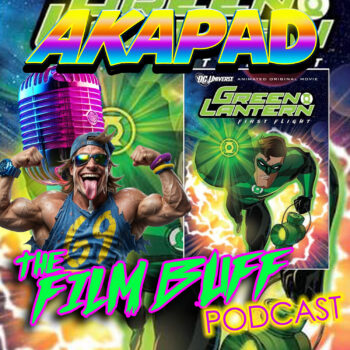
Green Lantern (2011) The Film Buff Review
- Posted by PETER A DELUCA AKAPD
- On September 2, 2026
- 2026, dc comics, green lantern, podcast, Ryan Reynolds, superhero movie, superhero movie adaptation, superhero podcast, talk
Fifteen years later, the 2011 Green Lantern movie starring Ryan Reynolds still occupies a strange spot in superhero cinema. Directed by Martin Campbell (Casino Royale, The Mask of Zorro) and shaped by Geoff Johns’ modern Green Lantern mythology, the $200 million Warner Bros. film opened to mixed-to-negative reviews, a 25% Rotten Tomatoes score, and a $237 million worldwide gross that fell short of expectations. Critics hammered the digital suit and mask, the pacing after Hal Jordan reaches Oa, and a villain threat that never quite landed. Yet the first hour still zips, the Guardians and Corps world-building has real scale, James Newton Howard’s score gives it a darker pulse that later DC films borrowed, and Reynolds’ cocky-test-pilot Hal remains the most watchable thing in it. With HBO’s Lanterns now pulling new eyes back to the character—and the 2011 movie itself climbing streaming charts—this Film Buff review revisits what the movie actually attempted, where it broke, and why it still has a pulp-cult afterlife instead of just punchline status.
Revisiting the 2011 Green Lantern Movie: Ambition, Flaws, and Legacy
Summary
This detailed review revisits the 2011 Green Lantern movie, highlighting its ambitious production and subsequent critical and commercial challenges. Directed by Martin Campbell—known for revitalizing iconic franchises like James Bond and Zorro—and shaped by comics legend Geoff Johns, the film came with high expectations. The narrative praises the movie’s initial momentum, cinematic tone, world-building, and casting of Ryan Reynolds, while also addressing its core failings such as the digital effects, pacing issues, and underdeveloped villain motivation.
The reviewer explores how Green Lantern attempted to expand the superhero cinematic universe by introducing complex lore centered around the Guardians of the Universe, the emotional and psychological journey of Hal Jordan, and the inclusion of significant characters like Sinestro and Kilowog. Despite its great visuals, thematic potential, and soundtrack by James Newton Howard, the movie faltered primarily because of unconvincing CGI—especially the digital mask—and a lack of sufficiently compelling antagonistic threat.
Though widely regarded as a disappointment and often ridiculed in pop culture, the film retains a sort of cult charm and nostalgic pulp quality. Its messy but earnest execution contrasts with more polished superhero films, creating an interesting legacy. The reviewer concludes that Green Lantern deserves a reappraisal, especially among fans of classic pulpy superhero stories and those nostalgic for early 2000s comic adaptations.
Highlights
- 🎬 Directed by Martin Campbell, famed for Casino Royale and The Mask of Zorro.
- 💰 The film had a $200 million budget but grossed only $237 million, underperforming expectations.
- 🦸♂️ Ryan Reynolds starred as Hal Jordan, laying groundwork for his eventual career breakthrough with Deadpool.
- 🛡️ Geoff Johns significantly influenced the film’s modern Green Lantern mythology and storyline.
- 🌌 The movie’s early sequences and Guardians’ portrayal received praise for world-building.
- 🎥 Criticism focused heavily on CGI, particularly the digital mask, which alienated audiences.
- 🎶 Score by James Newton Howard contributed to the film’s dark, atmospheric tone.
Key Insights
- 🎯 High Expectations from Proven Talent:
The involvement of Martin Campbell—who transformed Casino Royale into a cultural reset for James Bond—signaled a potential blockbuster success. Coupled with Geoff Johns’ stewardship of Green Lantern lore, the creative team had the recipe for a groundbreaking superhero film. - 🌀 World-Building as a Double-Edged Sword:
The film invested heavily in establishing the Green Lantern universe through the Guardians and the mythology of the power rings. This world-building was ambitious and immersive but resulted in a pacing imbalance; the training sequences in Oa slowed narrative momentum and diluted the threat level of the villain. - 🥽 Pioneering Use of Digital Effects, but Not Ahead of Its Time:
Green Lantern aimed to innovate with a fully digital suit and mask for Hal Jordan, a concept that could only later be refined and embraced thanks to advances seen in MCU films. However, in 2011, the technology failed to convincingly integrate the CGI elements, making the character appear artificial and undermining suspension of disbelief. - 🔄 Ryan Reynolds’ Career Resilience and Legacy:
Despite the movie’s failure, Reynolds’ portrayal of Hal Jordan kept the character alive in pop culture consciousness, paving the way for his redemption with Deadpool. Green Lantern even became a self-aware punchline in the Deadpool 2 film, reflecting Reynolds’ own acknowledgment of its shortcomings. - ⚖️ Tonal Ambiguity: Pulpy Fun vs. Serious Drama:
The movie oscillated between being a goofy, campy superhero flick—much like The Phantom or The Shadow—and aspiring to a darker, more serious superhero drama akin to Tim Burton’s Batman. This uneven tone caused confusion and hindered the film from fully defining its identity. - 🎭 Character Development of Hal Jordan:
Hal Jordan is portrayed as a flawed, somewhat untrustworthy protagonist who earns his ring amid internal chaos—a complexity that suggested potential for richer storytelling in sequels. His arc parallels the thematic depth found in comics where Lanterns wrestle with their burdens and moral codes. - 🔮 Seeding the Blackest Night Saga:
The film’s ending, with Sinestro turning yellow and the presence of Parallax, hinted at the iconic Blackest Night storyline. This teased a multi-film arc involving Hal Jordan’s fall and redemption, framing the Green Lantern mythology as a Shakespearean three-act tragedy with rich narrative potential.
Conclusion
While Green Lantern failed to resonate with critics and mainstream audiences at the time of release, this retrospective assesses the film’s bold attempt to translate complex comic mythos and cinematic ambition into a modern superhero movie. Its innovative digital effects were premature, and the narrative pacing and tone issues held it back, but the world-building, character foundations, and memorable cast have allowed it to remain a cult classic. For fans and newcomers willing to embrace its pulp aesthetic, Green Lantern offers a distinct, if flawed, chapter in superhero cinema worth revisiting.
The 2011 Green Lantern movie, directed by Martin Campbell and influenced heavily by Geoff Johns’ comic lore, was a big-budget attempt to launch a sprawling superhero franchise. Despite the strong pedigree and engaging presentations of characters and world-building, the film struggled due to poor CGI (especially the digital mask), underwhelming villain motivation, and uneven pacing. Ryan Reynolds led as Hal Jordan with a nuanced but chaotic hero’s journey. The film seeded future storylines like Blackest Night but fell short of cultural impact, ultimately becoming a cult, pulp favorite. It highlights the challenge of balancing innovation with timing and tone in blockbuster adaptations.
Highlights
- 🎬 Martin Campbell’s directorial vision brought a cinematic intensity rooted in his Bond and Zorro films.
- 💸 Budgeted at $200 million, the movie barely surpassed that at the box office, revealing a financial disappointment.
- 🦸 Ryan Reynolds’ Hal Jordan set a foundation for Green Lantern despite mixed reception.
- 📚 Geoff Johns’ involvement ensured core comic elements were preserved and modernized for film.
- 🌠 The film’s Guardians and space opera elements creatively expanded the superhero mythos.
- 🖥️ Early digital costume technology was groundbreaking yet unsuccessful in audience acceptance.
- 🎶 James Newton Howard’s score enriched the film’s dark, moody atmosphere akin to later DC adaptations.
Key Insights
- 🎯 Director’s Proven Success Raised Expectations
Campbell’s reputation for revitalizing franchises suggested Green Lantern could break the mold of superhero films, but it fell short of that potential due to execution flaws. - 🌀 Heavy World-Building Impaired Story Flow
Detailed mythos and setting depth impressed fans but slowed pacing, reducing narrative tension and diluting the villain’s impact. - 🥽 CGI Innovation Was Premature and Distracting
The digital mask, integral to the suit design, lacked realism and alienated audiences, illustrating the pitfalls of pioneering tech without sufficient development. - 🔄 Reynolds’ Performance Anchored the Movie’s Legacy
Though the movie was heavily criticized, Reynolds’ portrayal kept Green Lantern memorable and aided his later superstar resurgence. - ⚖️ Inconsistent Tone Weakened Audience Connection
Attempts at both pulpy fun and serious drama created tonal dissonance, illustrating difficulties in balancing genre elements. - 🎭 Hal Jordan’s Complex Character Arc Holds Promise
Portrayed as an antihero with doubts and challenges, his journey offered rich material indicative of comic narratives but underexplored onscreen. - 🔮 Setup for Blackest Night Saga Indicates Bigger Plans
Ending hints at a layered three-film arc foreshadowing large-scale conflicts show the filmmakers’ high ambitions, unrealized at the time.
This review encourages appreciation of Green Lantern as a flawed but fascinating artifact of superhero filmmaking efforts in the early 2010s.
Here is the transcript for this Green Lantern (2011) film reivew from AKAPAD The Film Buff
00:00:01
Quiet on the set. >> Camera speed. Down production. Take one. >> Action. >> I really do like deficits. Like the ones we have tonight. For all of you, for all of my film buffers, everyone. 2011, Green Lantern. Do we need to talk about the budget and how much money this movie made? Budget 200 million, box office 2 37. Out of the gate, starring Ryan Reynolds. Somewhat, right? Like fingerprints all over, a guy named Geoff Johns. He’s the one that created the modern Green Lantern lore. Uh he
00:00:45
expanded the mythology. He he did this one storyline called Blackest Night. There’s everything about the modern Green Lantern franchise we attribute to Geoff Johns. But Geoff Johns is all over this movie. We have Martin Campbell. Let’s Let’s go through some of his filmography. And before we do, welcome back, my AKA Patreons. How is everyone doing? I think we’re rocking and rolling. Yeah, I I we’re recording every single day. We are all systems are go. And if you’re new to this podcast,
00:01:27
we’re approaching 1,300 episodes. And that’s 1,300 individual opinions for movies. We do one movie per episode. And then everything is documented, it’s transcribed, it’s available via search on akapad.com. That’s my beloved website, the greatest portfolio website ever conceived. The Wayback Machine can’t even back it up. It’s that massive. It’s It’s It’s one of the biggest websites on the web. But, with all of that >> [laughter] >> I love pop culture. I love movies. I
00:02:04
love comic books. I love to draw. Uh I’m I’m an IT guy in Center City, Philadelphia. I live not far from City Hall. I just love being in the city. I love technology. And I love stuff like this. 2006, can we go back to 2006? Because this is the beginning of the hype of this movie. 2006 James Bond comes out of nowhere. Casino Royale Daniel Craig and people again, we forget history. The world was against Daniel Craig against uh as James Bond. After that movie and Martin Campbell genre specialist, he
00:03:01
he knew how to do big movies and have big moments. James Bond Casino Royale has a world expansion. The world that James Bond is in in that movie, the spy world. It’s the best spy world maybe like ever put to film. But, previously he did two great comic book movies. Mask of Zorro 1998. I still remember seeing that in the theater. That was a big deal. The one I didn’t see in the theater 2005 The Legend of Zorro. 2005 Legend of Zorro might be the last time Zorro was just really significant
00:03:41
in the culture. Previously we loved this movie. I did an episode I forget if if it got released. 2000 Vertical Limit >> [snorts] >> He follows Casino Royale Royale up with in 2010 with Edge of Darkness, another good one. So, in 2011, when Martin Campbell is loading his revolver and he’s going to shoot us with this movie. And one of the bullets is Ryan Reynolds. That if you saw a still shot of him in the leather jacket in the flight gear, you said yes. We have Sinestro in this movie. We have
00:04:29
I think one of the best Guardians. It’s just the way the Guardians work in this and now I said that, too. I said that about a lot of how Green Lantern works. It’s It’s a very similar to something like Batman. Where for Batman it’s the position with him and Alfred. It’s position with how do we view the Batcave? What’s Bruce Wayne doing when he’s not right? Like what’s the Bruce Wayne like? So, for Green Lantern, the Guardians, the way we look at the Guardians this past episode of the HBO show
00:05:10
episode 3 it’s a Guardian position episode and people are just flipping out at it. People are losing their minds over that episode. We have Green Lantern: First Flight. We have this. And we see the scope of this universe through this council of Guardians. It’s very similar to how we view the world of Lord of the Rings through Gandalf. Or Elrond. The The High Lords. We get a hell of a cast of crazy cool looking aliens. And where the Let’s get into kind of like where this movie broke because I Martin Campbell
00:05:57
was primed for this movie. We got Geoff Johns involved. We have music. I The music the score the theme Yeah, James Newton Howard Dion Beebe Biba Dion Biba. This is our cinematographer. I love the dark tone in this movie. I think a lot of this dark tone set uh set itself into Man of Steel the Justice League movie like the Zack Snyder stuff. So along the way this movie, right? It there’s a certain level of hype. I saw people see Sinestro. They see Kilowog Kilowog. People know that the yellow entity
00:06:42
uh Failax, right? No, Failax. It’s uh What’s Oh my god, brain fart. The yellow dude, Failax. I keep wanting to say it. I’m going to have to stop this and look that Here we go. Hold on up here. Do we have Parallax, there we go. Parallax. Where this this movie begins with Parallax and I love the beginning of this movie. I love this movie for the first hour. I think this movie moves, zips, and syncs. I think where this movie falls off a little bit is something. Because what when when I say where I
00:07:21
think this movie falls off, this is where I think it lost the audience. When he gets to Oa and you begin the training because the threat isn’t big enough. Uh there’s so much time spent with the introduction in this movie. So online, yeah? Like we get our, uh, internet, we get news forums, everyone’s reading equal news multiple times a day. Equal news, just for, uh, stories like this, and and the way they would track it. It would just They would do a story, like Sinestro is pink. Confirmed. It would just be like a
00:08:00
headline, confirmed Sinestro is pink. And that would be a level validation that you would just swoon over. And then it came out. It came out that they’re doing digital uniforms for Green Lantern. Green Lantern will be all digital, including the mask on the face. And people just couldn’t get over the mask on the face. Now, the modern-day Marvel Cinematic Universe, a lot of what you see on screen, like for example, when Robert Downey Jr. is talking, you see his face. Everything below the face is CG.
00:08:40
It’s accepted now. Green Lantern broke ground on this production method. Nothing looked good enough, and nothing looked real enough. People didn’t like the effects. They didn’t like the that Ryan Reynolds had a CG diamond mask, or a CG mask. They couldn’t And this is what killed the movie going into it. And people were ready, and people had to have been wowed, and really blown away at that point, and they weren’t. The movie’s dead on arrival. Later becomes a joke in Deadpool 2,
00:09:18
where Deadpool, uh, dimension hops and kills Ryan Reynolds as he’s reading the Green Lantern script. You give Ryan Reynolds credit, career-wise, for bouncing back, right? Like he really, uh, the way he came back with Deadpool, uh, it just really makes people, uh, just believe. Cuz yeah, he was he was wise uh crackery too as Hannibal in Blade Trinity. But they dog piled at that point. The you could just sit down and make fun of this movie. When I watch this movie, I put this movie on the shelf. It’s it’s
00:09:58
a pulp shelf. Cuz I think this movie is hokey. I think it’s pulpy. I think when we breach the first hour, it just gets wild and crazy and fun. It just gets goofy like So, to me it’s a lot like Billy Zane’s Phantom, Alec Baldwin’s The Shadow. Uh what’s it now? Red Brown? Oh my god, Flash Gordon. Martin Campbell. Both of his Zorro movies. Warren Beatty, Dick Tracy. All of these movies you can line up all of these movies and they just flow together. And it’s amazing how well they
00:10:35
fit together. So, universally and and these movies span you know, some of them are decades apart. There’s a level of lightheartedness. There’s a level of fun. There’s a there’s a zip to it that’s really hard to define, but these filmmakers through these different generations felt it was right to hit that note. And I feel like they all they [clears throat] all did. What is hard to do is what Tim Burton did with Batman. You do the weird, you do the hokey, but you you you give it like this edge.
00:11:13
And the edge it carves carves itself right into the culture. And that’s what all of that was the measuring stick outside of Flash Gordon. All these movies were measured against a phenom a phenom of a movie. And it’s really not fair. Nowadays, uh no one contextualizes this movie and as something that people were ready to pop. They were ready to be entertained. They wanted to see this movie. I mean, the merch it was it was fun going into the toy store and just seeing all the Green Lantern
00:11:49
stuff. Uh Parallax build-a-figure, one of the weirdest build-a-figures ever. And I remember leaving this movie just absolutely heartbroken, disappointed. I just could I just didn’t get it. But as time went on, I I was just watching it recently on HBO Max. I I like putting this movie on. I like that the fighter jet stuff in the beginning. The training sequence explains everything. We don’t have enough time with the villain, that’s okay. But I do feel the Ryan Reynolds Green Lantern could have flew down to walk with
00:12:34
the Ben Affleck Batman. Wonder Woman, Gal Gal Gadot, the Henry Cavill Superman for Batman versus Superman. I feel like he could have just flew down and walked with them. Cuz I think the character building is that good in this movie. I and Hal is a little bit of a guy you don’t trust from early. And you see he gets the ring. He’s maybe earned it, but he And and you know, this is a part of the back and forth with Green Lantern. Exactly what are the internal circumstances of Hal Jordan getting the
00:13:10
ring? How and why? The Green Lantern show right now spent an hour trying to explain to you how John Stewart could get the ring. Isn’t that nuts? An hour. Just just on that. Just on the psychology and the believability of what would make him earn the ring. There’s a little bit of chaos to how Jordan getting the ring, which is why when he rises to be their greatest one, it’s there. And we get a perfect ending. We get Sinestro turning yellow. He becomes the Yellow Lantern. This leans towards
00:13:46
the Blackest Night. Hal Jordan falling to Parallax and killing all the Guardians, the entire entire core in my view, is the story. That’s a three movie That’s a three-act play. That’s very Hamlet, dare I say. But yeah, AK Pirates, I don’t know. I I I would watch this movie and then watch Billy Zane as the Phantom. Sit down. Watch Alec Baldwin entertain us as the Shadow and and put this one on next. Watch this movie and watch Flash Flash Gordon. It’s I don’t know. Every time I’ve seen this movie since my
00:14:28
first viewing, I’ve I’ve liked it a little bit more. And I think it’s because because I’m I’m trying to learn to enjoy more and see the better in these things. And I think this is a fun movie. I think if you had kids, you put this movie on, they’re going to like Green Lantern. They’re going to think it’s fun. All right, AK Pirates. I love you guys. Rock and roll. Okay, that’s your up. >> [applause]
Green Lantern (2011) is not a secret masterpiece. The CGI mask still looks like a video-game overlay, the middle act sags under training and lore dumps, and Parallax never becomes a character you fear the way Sinestro or Hector Hammond briefly threaten to. Those problems are real. So is the ambition: Campbell trying to give a cosmic Corps the same world-expansion energy he brought to Bond, Johns’ fingerprints on the mythos, the early Oa sequences that actually feel like an intergalactic police force instead of another Earth-bound origin, and Reynolds playing Hal as a guy who has to earn the ring instead of instantly owning it. The movie even plants the yellow-ring Sinestro turn and the shadow of Blackest Night—a bigger, messier saga it never got to finish.
If you only remember the memes and the Deadpool 2 joke, watch the first 50–60 minutes again. If you bounced off the digital costume in 2011, the current Lanterns conversation is a decent excuse to see how the same source material can be rebuilt. For Film Buff listeners and anyone who still has affection for early-2010s comic adaptations that swung bigger than they could land, this one remains a fascinating, flawed chapter rather than a total write-off.
Full episode, timestamps, and the rest of the 1,300+ movie reviews live at AKAPAD.com. Search “Green Lantern 2011,” hit play, and tell me where you think the movie actually dies—and whether the first hour still holds.

AKAPAD is a versatile thinker known across Philadelphia, Europe, and even in the vast Multiverse as The Electic One. By day, he excels as an IT Mastermind, assisting individuals, both big and small, with a wide range of simple and complex solutions. In contrast, he is also a talented illustrator, a passionate comic book enthusiast, a creative content creator, and an active live streamer. Additionally, his podcast, “AKAPAD The Film Buff Podcast,” boasts an impressive catalog of over 500 episodes available on nearly every major platform.